

You remember those "soft landing" forecasts? Yeah, me too. This past week, March 2026, felt less like a soft landing and more like a crash landing for half my portfolio. We’re all still reeling from the ECB's announcement.
I mean, seriously? A hike. A quarter-point hike in March. Just when everyone, and I mean everyone, was talking about rate stability, maybe even another cut later this year.
The Shocking March 2026 Decision
It hit like a brick. The European Central Bank, in its wisdom, decided to raise its main refinancing rate by 25 basis points. Twenty-five. Points. That makes it, what, the first major central bank to actually hike after starting a cutting cycle in over a decade?
The market had priced in an 85% chance of a hold. Maybe a 10% shot at a small cut. But a hike? That wasn't even on the bingo card for anyone sane. You could almost hear the collective gasp from London to Frankfurt. Some of us still have the charts seared into our eyeballs. That EUR jump? Wild.
I was in a few EUR long positions, betting on a softer ECB stance that would calm the nerves and boost growth. Nope. Wiped out faster than a free lunch at an analyst conference. The short-term pain for many was immense, a truly surprising data point nobody saw coming.
Why the ECB Went Full Hawk in March 2026
Look, they kept bleating about "data dependency." And the data, apparently, screamed danger. Core inflation refuses to die. It just doesn't. We thought it was gone last year, everyone cheered the 2025 cool-down.
But then January numbers hit, February numbers hit even harder, and suddenly, services inflation in the eurozone was back to spitting distance of 4%. Add in that sudden, completely unexpected squeeze on agricultural commodities—hello, food price shock again—and you’ve got a real mess.
It's that global supply chain resilience, or lack thereof. People kept saying "this time it's different," but a few geopolitical tremors and BAM, shipping costs are up, energy bills nudge higher, and producers start passing it on. You know how it works. That's the core of what's really trending right now in March 2026 if you ask me.
Forex Markets: The EUR Rocket
Oh boy, the euro. That thing went ballistic. Traders were scrambling, those holding long USD/EUR positions got absolutely shredded. It wasn't just a bump, it was a straight-up vertical ascent. Remember when we were all talking about parity last year? Hilarious, in hindsight.
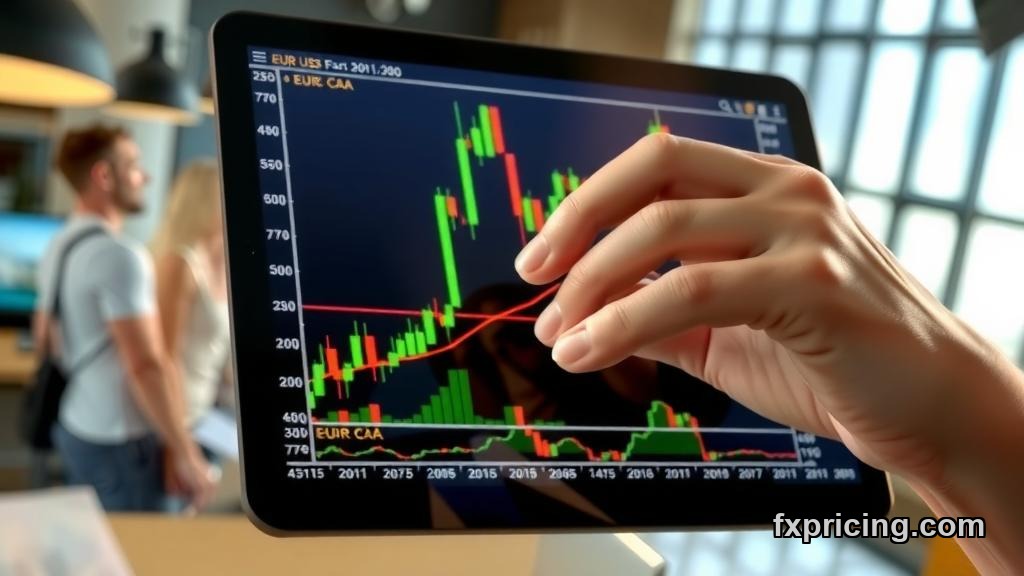
The yield differentials just widened, making EUR-denominated assets suddenly very attractive to carry traders. Everyone piling in, trying to catch the rally. I got burned hard on a bearish EUR bet I’d been nursing since late 2025. Thought I was smart playing the long game on rate convergence. Ha. Convergence, right.
Here’s what happened in the immediate aftermath, just for a little context on how wild this was:
Day 1: ECB Announcement
  EUR/USD: +2.1%
  German 2-year Bund yield: +38 bps
  Italian 10-year spread: +15 bps

Day 2: Follow-Through
  EUR/USD: +0.8% (consolidating gains)
  European Stoxx 600: -3.5% (major hit)
That German 2-year Bund yield jump was pure panic, people unwinding bets so fast it made your head spin. You can check the real-time fallout on live forex rates, though good luck making sense of the initial chaos. It was brutal.
Equities and Crypto: A Sea of Red
Equities? Forget about it. The bond market freaked out, so naturally, stocks followed. Higher rates mean higher borrowing costs, lower future earnings valuations, everything goes south. European indices just bled out, dropping like stones. Technology, particularly the highly valued growth stocks, took the biggest hit.
Some of my AI plays, the ones everyone's been so bullish on for 2026, just evaporated value. A 5-7% drop in two days isn't just a dip; it's a re-evaluation of reality. This is exactly why you gotta be quick on your feet when the big central banks pull a stunt like this. See the damage, cut your losses, rethink. That’s a key bit of how to manage what’s trending RIGHT NOW in March 2026.
And crypto? Initial knee-jerk reaction was a sell-off across the board, Bitcoin leading the way down with other risk assets. Then it got weird. After the initial dip, some of the major coins, especially Bitcoin and Ether, actually started to stabilize faster than traditional equities. The "inflation hedge" narrative, as tired as it sounds, actually gained some traction for a hot minute. It’s wild watching how fast narratives shift.
This market environment, where central banks are clearly still fighting the inflation beast, actually pushes some toward assets perceived as separate from traditional finance. We’ve seen it before. You can always track the current live cryptocurrency prices to see if the bounce holds.
My Take: What March 2026 Means for You
So, what's the deal for the rest of 2026? Volatility. Expect it to stay. That ECB move tells us they are deadly serious about inflation, even if it means sacrificing growth, even if it means blindsiding markets. This is not some temporary blip.
The easy money days are clearly over. Anyone clinging to the idea of swift, multiple rate cuts by all major central banks needs a reality check. This is not about smooth sailing. This is about watching every piece of economic data like a hawk and having a strategy for when the wind changes direction. That’s the real 2026 market strategy, really.
This whole situation reinforces what Fxpricing Blog has been saying for ages: don't get complacent. Markets can surprise you, even when everyone agrees on the path forward. Disagreement is where opportunity often lies, but also where the biggest risks hide.
What I’m Doing Next
I'm re-evaluating everything. For now, defensive plays, high-quality assets. I'm taking a hard look at shorting some of those overvalued growth stocks that still haven't adjusted to this higher rate environment. And maybe, just maybe, I’m taking a small position on EUR strength against some of the weaker majors, cautiously of course. Gotta adapt fast.