


The signal says Strong Buy. The confidence? Low. That's not supposed to happen, but here we are with NVIDIA Corporation sitting at $189.34 on February 24, 2026.
I've seen this setup before. Signal score of 106.2 looks healthy on paper, price sitting above every meaningful moving average, but then you notice the ADX at 10.0771 and the trend descriptor literally says "Weak". Something doesn't add up.
The Contradiction Nobody's Fixing
EMA 25 shows $186.40. Price is above it. EMA 200 at $171.93. Price cleared that too. SMA 100 sitting at $186.12. All green lights for the algorithms that generate these signals.
But ADX under 15 means there's barely a trend at all. When ADX drops below 20, you're trading noise, not direction. At 10.0771, we're in serious chop territory. The Parabolic SAR screaming Strong Buy at $174.79 doesn't matter if the market's moving sideways.
I watched NVDA drop 1.125% today from an open of $191.49. Not a crash, just drift. The kind of drift that happens when nobody's convinced.
What The Oscillators Actually Say
Stochastic K% hit 81.49. That's Buy territory, sure, but it's also close enough to overbought that one bad session flips it. We're at 65.86% of the Bollinger Band range — not stretched, but not cheap either.
The bands themselves show Middle at $185.93 with Normal squeeze conditions. Translation: nothing extreme happening. No breakout setup, no panic selling. Just… price action that goes nowhere fast.
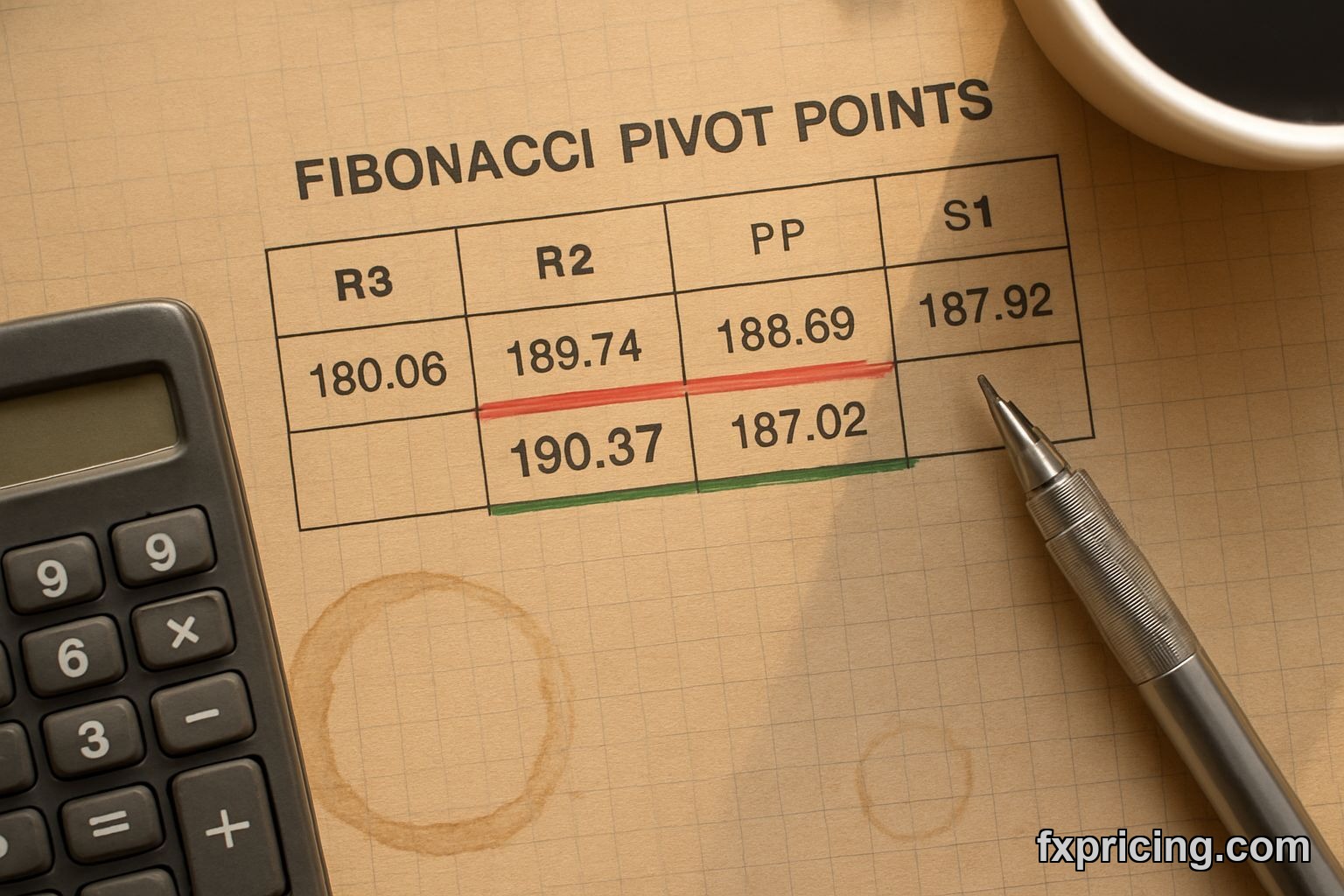
Fibonacci pivot has resistance at $190.37 and support at $187.02. We closed between them at $189.34. Classic midpoint drift. When you're bouncing between pivot levels this tight, you're not in a trend — you're in a range.
The Numbers That Actually Matter
Check the one-month low: $171.03. We've gained about 10.7% off that level. Decent bounce, but compare it to the all-time low of $0.033 and you realize this stock's come a long way. Maybe too long for easy gains ahead.
Here's what I keep coming back to — every indicator wants to call this bullish, but the confidence rating says Low. The system itself doesn't trust its own signal. When the algo admits uncertainty, I listen.
- Signal Score: 106.2 (above 100 threshold)
- ADX: 10.0771 (trend barely exists)
- Price vs EMA 25: +1.6% above
- Price vs EMA 200: +10.1% above
What I'd Do With This Setup
If I owned NVDA already, I'm not selling on a Strong Buy signal with Low confidence. But I'm not adding either. The gap between $187 support and $190 resistance is too narrow for comfort, and the ADX tells me we could ping-pong here for weeks.
New position? Hard pass. I don't chase Strong Buy signals when the trend strength looks like this. You end up buying the middle of a range and waiting forever for direction. Been there, lost money on the opportunity cost.
The stock market doesn't reward hesitation, but it punishes bad entries harder. This is a bad entry point — not because the price is wrong, but because there's no conviction behind it.
The Real NVIDIA Corporation Forecast For 2026
Look at the performance metrics again. We're trading near recent highs but can't break through. Parabolic SAR keeps signaling upside, but price keeps fading from the open. Down over 1% today despite every moving average pointing up.
That's distribution. Not the kind that shows up in volume data, but the kind where buyers aren't willing to pay more and sellers aren't desperate yet. Equilibrium at $189, which means sideways until something breaks.
I've watched tech stocks do this before — hover near moving averages, generate Buy signals, then bleed slowly for months while everyone waits for the next catalyst. The all-time low comparison sounds impressive until you realize it's ancient history that doesn't predict tomorrow.
My honest take: this Strong Buy signal is noise. The Low confidence warning is the only part worth listening to. If you're hunting NVIDIA Corporation price action, wait for ADX above 25 and a clear break of $190.37 resistance. Until then, you're trading hope, not structure. And hope doesn't pay when you're stuck in a $3 range watching the days tick by.
The forecast isn't bullish or bearish — it's stuck. And stuck doesn't make money, even when the Fxpricing Blog indicators try to dress it up as a Strong Buy.